Handpan buying guide
Best Handpan for Meditation: How to Choose the Right Scale & Frequency
Find a handpan for meditation, yoga or calm solo playing. Compare scales, note counts and 432Hz vs 440Hz before choosing your instrument.

Handpan buying guide
Find a handpan for meditation, yoga or calm solo playing. Compare scales, note counts and 432Hz vs 440Hz before choosing your instrument.
Quick answer
Selected by Sonara
Our first pick
Another strong option

More range to explore
A handpan can be an excellent instrument for meditation because it allows you to create slow, repeating patterns with very little technical setup. The key is choosing a scale, note count and tuning that support the atmosphere you want to create.
For meditation-focused playing, we generally recommend a 9- or 10-note handpan in D Minor or D Kurd. These layouts are simple enough to play intuitively while still giving you enough range to create evolving, spacious melodies.
There is no single “best” meditation handpan, but some choices are easier to use for calm, repetitive playing. D Minor and D Kurd are popular because they have a warm, introspective character and the notes blend naturally together.
If your priority is relaxation, meditation or slow improvisation, avoid choosing by note count alone. A beautifully tuned 9-note instrument can be more satisfying than a larger handpan if its scale matches the atmosphere you want.
D Minor and D Kurd are excellent choices if you want a deeper, more contemplative mood. They are also easy to improvise on, which helps you stay focused on the flow of the session instead of thinking about music theory.
Major scales can also work beautifully, especially if you want meditation music that feels brighter or more uplifting. The choice is emotional rather than technical: listen for the scale that creates the atmosphere you want.
You will often see 432Hz discussed in meditation and wellness communities. It is simply a slightly lower tuning reference than the standard 440Hz concert pitch. Some players prefer its sound, while others prefer 440Hz.
There is no reliable evidence that 432Hz universally creates special health or therapeutic effects. For buying purposes, treat it as a sound and compatibility preference. Choose 440Hz if you want to play easily with standard-tuned instruments; choose 432Hz if you specifically prefer that tuning and expect to play mainly solo.
For meditation, more notes are not automatically better. A 9-note handpan keeps the layout simple and leaves space between phrases. A 10-note handpan adds a little more melodic variety while staying easy to navigate.
A 12-note model makes sense if you want to combine meditative playing with more melodic exploration. For pure simplicity, 9 or 10 notes remain the strongest choices. If this will also be your first instrument, see our beginner handpan buying guide before deciding how many notes you need.
Yes. Handpans can provide a soft melodic background for yoga, breathwork and meditation sessions. The instrument works especially well when you use simple repeating motifs, slower tempos and plenty of silence between phrases.
If you are choosing a handpan specifically for this type of use, prioritize the scale and tone over the number of notes.
Start by listening for the mood of the scale rather than shopping by appearance alone. Then confirm the note count and tuning reference. If you plan to play mainly by yourself, either 432Hz or 440Hz can work; if you expect to play with standard-tuned instruments, 440Hz is generally the more compatible choice.
For meditation, a clear and controlled sound is more useful than simply having the largest possible range. Nine or ten well-chosen notes are enough for long, evolving patterns and leave space for silence between phrases.
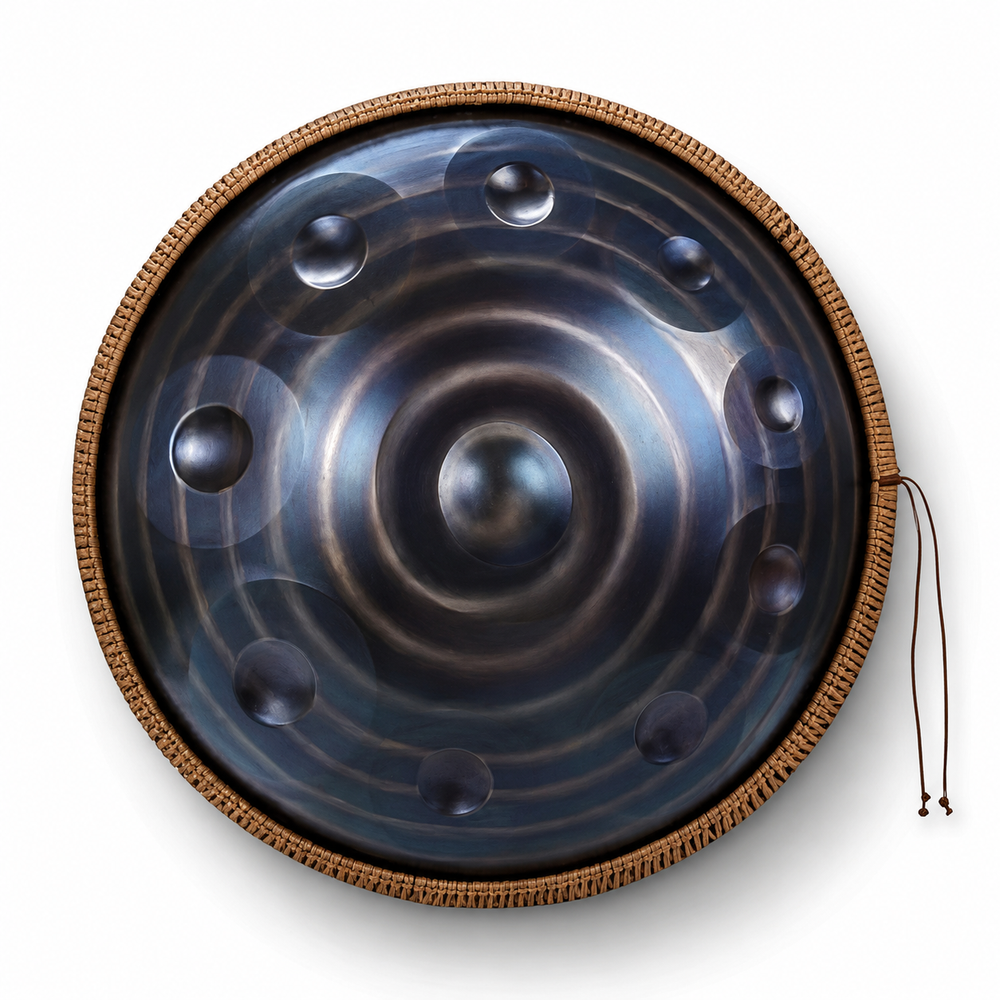
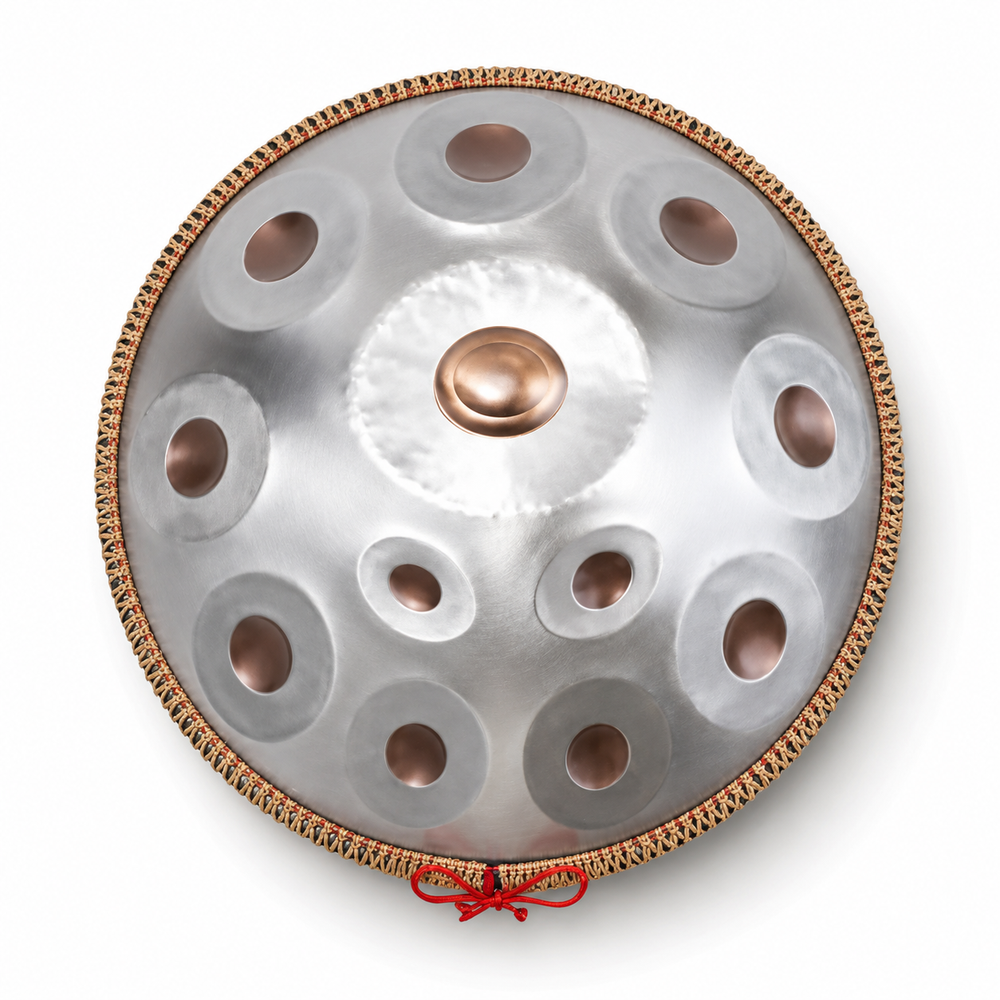
Choose the Nocturne if you want a simple D Minor layout with both 432Hz and 440Hz options. Choose the Sonara Luna if you want more note-count flexibility. Choose the Mandala if you already know you want a 432Hz-focused instrument with a distinctive visual finish.
Listen to how long each note decays, whether notes sound balanced at gentle playing volumes and how the scale feels during slow repeating phrases. The ideal model is personal: a recording you genuinely enjoy is more relevant than an unsupported promise about therapeutic frequencies. Compare samples on the same headphones where possible.
Both are pitch references. Neither has established clinical superiority for meditation. A 440 Hz instrument is convenient when playing with commonly tuned tracks or other musicians. A 432 Hz instrument may be a reasonable personal preference when you primarily play solo, provided the exact variant offers that reference.
Start with the Mandala 432 Hz (listed from $999) if the 432 Hz reference is specifically important to you. For D Minor options, compare Solis and Luna, both starting at $799. If D Kurd is the priority, review our D Kurd buying guide.
Use the budget comparison and full Sonara handpan collection to match your preferred scale, price and note count. Verify the exact listing before purchasing.
Find your sound
Listen for the scale that creates the atmosphere you want. Compare Sonara handpans in 432Hz and 440Hz and choose the note layout that feels natural to you.


Trusted by 2,000+ Handpan Lovers