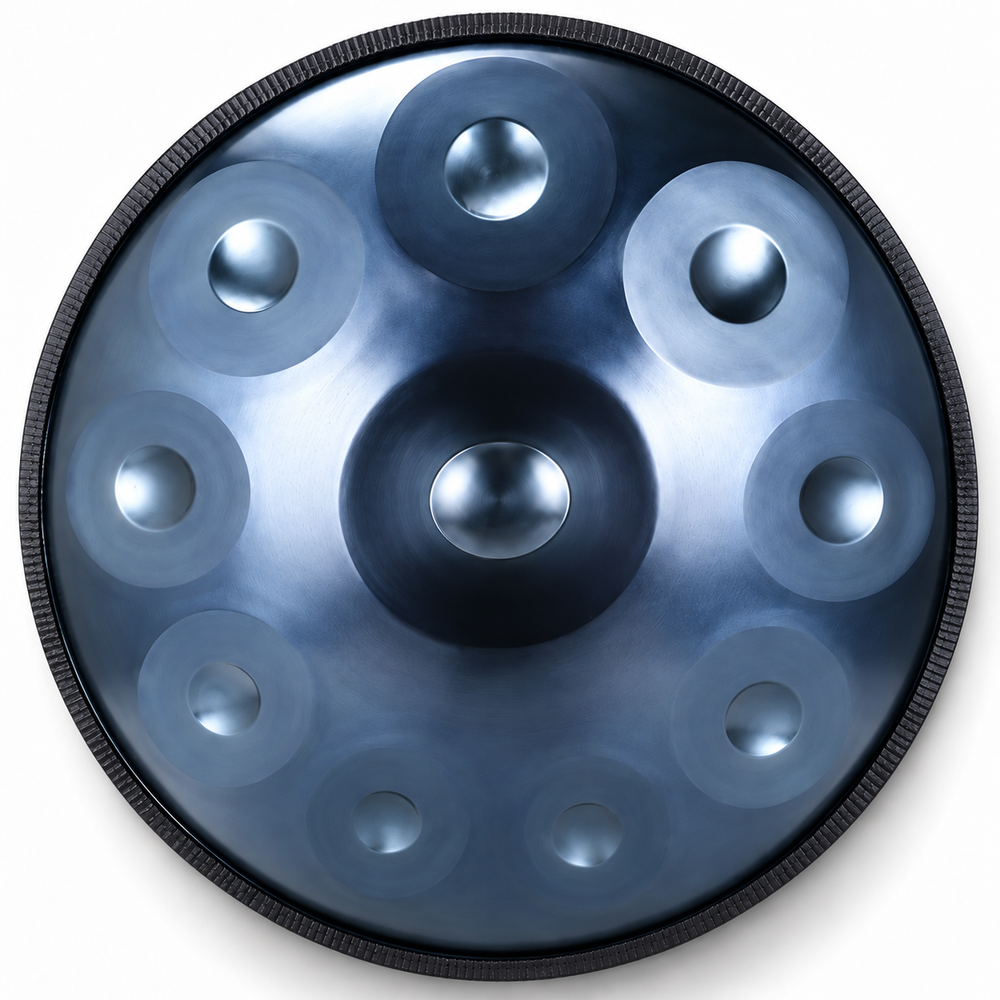
Handpan buying guide
Best D Kurd Handpans: 9, 10 & 12 Notes Compared
Find the right D Kurd handpan for your music. Compare 9-, 10- and 12-note configurations, starting prices and exact note layouts before ordering.

Handpan buying guide
Find the right D Kurd handpan for your music. Compare 9-, 10- and 12-note configurations, starting prices and exact note layouts before ordering.
Quick answer
Selected by Sonara
Ready to buy a D Kurd handpan? The scale is widely used for melodic improvisation, but the phrase “D Kurd” does not tell you everything about an instrument. Your biggest decision is the precise note layout, followed by how many notes you genuinely need. Here is a Sonara-focused comparison of models and configurations, with starting prices verified against the store catalog in October 2026.
| Model | Listed variants | Starting price |
|---|---|---|
| Aether D Kurd | D Kurd | From $849 |
| Azure D Kurd | 9, 10 & 12 notes | From $899 |
| Terra D Kurd | 9, 10 & 12 notes | From $999 |
| Lotus D Kurd | 9, 10, 12 & 14 notes | From $999 |
| Elara D Kurd | 9, 10, 12 & 14 notes | From $1199 |
Catalog prices checked October 2026; the exact variant price may be higher. Confirm current price, configuration and availability on its product page.
D Kurd belongs to the D minor tonal family and is a familiar choice for expressive improvisation. The central ding is generally a D, while the surrounding pitches create a characteristic minor-mode sound. However, different makers and extended configurations can use different exact pitch lists. A 10-note D Kurd from one seller may not match every other 10-note product. Never assume the notes from a generic tutorial will match without checking the full note map.
A 9-note handpan can offer a manageable playing surface and enough tonal material for many rhythmic and melodic patterns. This is often a reasonable starting point when you are learning to build phrases, vary dynamics and coordinate both hands. Consider the 9-note configurations of Azure D Kurd, Terra D Kurd and Lotus D Kurd. Open the exact configuration before ordering to check which pitches are included. Note that some sellers count the central ding as part of the total and some descriptions use a different convention.
Ten notes may be a comfortable compromise when one additional pitch meaningfully expands the arrangements you want to play. The extra pitch is not always the same across products. If your favorite instructor uses a high C or another particular extension, verify that pitch appears in the version you choose. Compare Azure D Kurd, Terra D Kurd and Lotus D Kurd and ask about the precise note map if the listing is unclear.
Choose an extended layout when you know which added pitches your music calls for. Twelve-note variants can extend range or add melodic options, and some may place notes on the underside. This can be valuable for composing, but does not guarantee a better experience for a new player. Compare the available 12-note versions of Azure D Kurd, Terra D Kurd, Lotus D Kurd and Elara D Kurd. Check their respective selected prices: a product's starting price does not necessarily apply to the 12-note variant.
If you already compose or perform and can identify the missing pitches in a smaller handpan, extended designs are worth exploring. Lotus D Kurd and Elara D Kurd list 14-note options; Atlas D Kurd lists 16- and 18-note versions. These are not inherently superior to compact instruments. Extended instruments require care when comparing physical reach, underside placement and the compatibility of tutorials.
Aether D Kurd starts at $849. Verify its note count and selected configuration before assuming it matches the D Kurd layout you want.
Azure D Kurd starts at $899, and Terra D Kurd starts at $999. Compare the note charts, audio and final price of identical note-count versions rather than buying purely on the price shown in the collection.
Lotus D Kurd starts at $999 and also lists a 14-note version. Elara D Kurd starts at $1,199 and lists 9-, 10-, 12- and 14-note versions. Check the exact model information for the individual variant.
It matters for musical compatibility. A 440 Hz reference is widely used when playing with other conventionally tuned instruments. A 432 Hz reference is different and should be a conscious preference, not an assumption that the instrument will have special healing properties. Verify available tuning choices on the product page and learn more in our meditation buying guide.
It can be an approachable choice, particularly when tutorials support the exact layout you buy. See our beginner's buying guide.
No. A note count is a range and layout decision, not a reliable indicator of acoustic quality.
Not necessarily. D Minor is a broad tonal category while D Kurd points toward a more specific scale arrangement. Compare exact pitches.
Aether D Kurd, Azure D Kurd, Terra D Kurd and Lotus D Kurd all list starting prices at or under $999, but some configurations can cost more. Check our budget handpan comparison.
Visit our US online-buying checklist and compare product listings and delivery options at checkout.
Shop all D Kurd and other Sonara handpans →
One common D Kurd nine-note arrangement uses a central D3 ding and the surrounding pitches A3, Bb3, C4, D4, E4, F4, G4 and A4. This is an illustrative convention, not a verified specification for every Sonara variant. Always consult the precise diagram for the handpan you select. The distinction matters because other variants may add high C, lower notes or underside pitches in a different layout.
Write down the notes required by your favorite arrangement. Then compare that list against the manufacturer's full chart for each 9-, 10- and 12-note candidate. One added pitch can be highly valuable if it completes the melody you want to play. Several additional pitches can be less valuable when they are outside your repertoire. If you play seated, also consider whether you can reach any underside note comfortably without losing control of the instrument.
Prioritize the note map from the course you intend to use and select a matching compact configuration. Compare the Azure, Terra and Lotus listings before choosing.
Identify the exact notes missing from your current layout. If a 10- or 12-note configuration fills those gaps, compare its price and reach. If it does not, saving for a different extension may be smarter than purchasing simply because the total number is larger.
Compare the 14-note Lotus and Elara configurations, or Atlas 16/18 notes. Ask for a full diagram covering both shells.
No. Tuning stability, note separation and dynamic response must be evaluated separately from the number of notes. A larger layout can offer greater range, but it adds no automatic guarantee about craftsmanship or long-term intonation. Listen for unwanted interaction between neighboring notes when a suitable recording is available.
Find your sound
From accessible 9-note configurations to wider 12- and 14-note layouts, explore Sonara D Kurd instruments and choose the right pitches for your music.


Trusted by 2,000+ Handpan Lovers